Sajjad's Kitchen Experience: When I tried cooking heart-healthy, lower-sodium meals for the first time, everything tasted flat and uninspiring. I quickly realized that salt isn't the only way to make food exciting. Professional chefs rely on acid, heat, aromatics, and umami to wake up the palate. Here are the 8 spice blends and flavor techniques I use every week.
The 4-Step Flavor Layering Blueprint
Instead of relying on a single heavy dash from the salt shaker, delicious low-sodium cooking builds taste in four sequential layers during cooking:
The Acid Secret: Why Your Tongue Misses Lemon More Than Salt
Human taste buds confuse the sensations of saltiness and acidity. When a batch-prepped dish tastes "dull" or "heavy," most home cooks instinctively reach for the salt shaker. However, what the dish actually needs is acid.
A splash of raw apple cider vinegar, a squeeze of fresh lemon juice, or a pinch of Middle Eastern ground sumac activates salivary glands and brightens heavy starches (like potatoes or lentils) instantly without adding a single milligram of sodium.
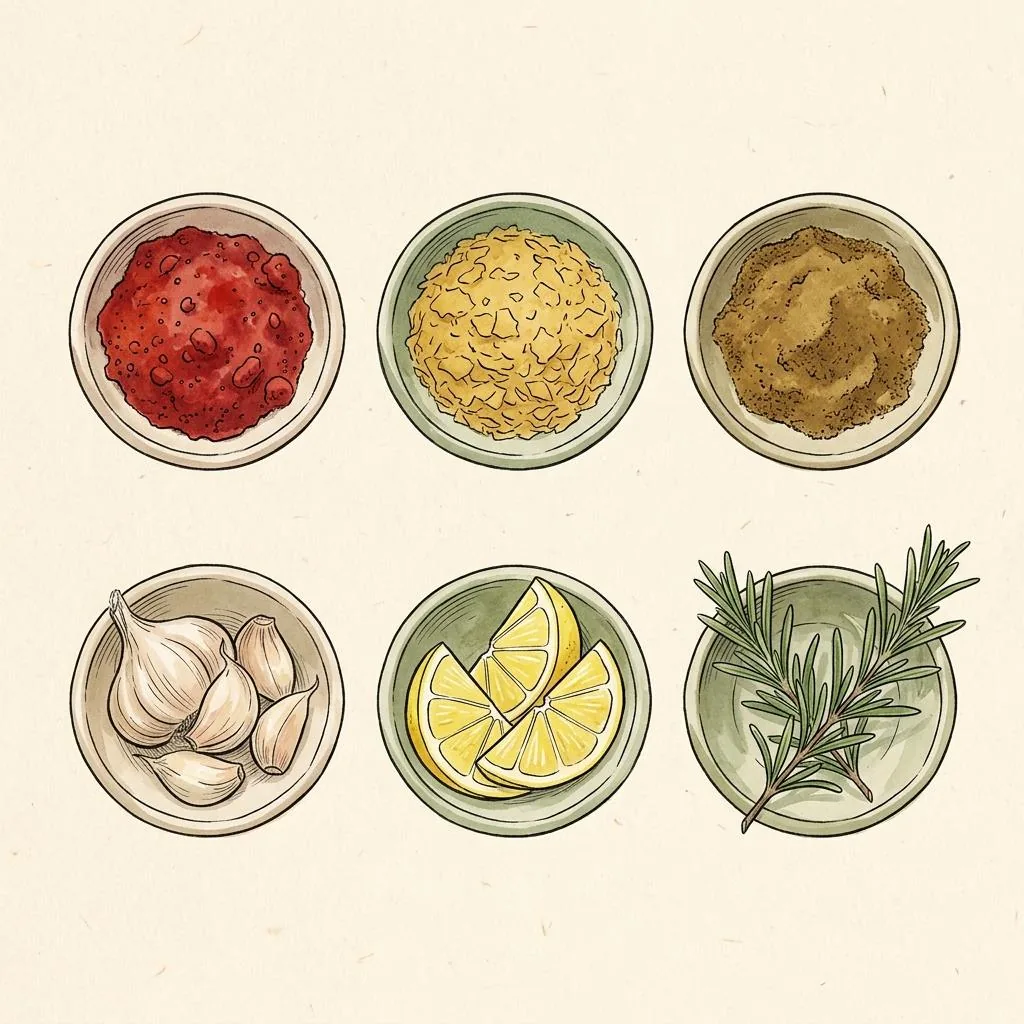
Natural Umami Boosters (Nutritional Yeast, Mushrooms, Garlic Confit)
Umami is the savory, rich fifth taste. You can create immense savoriness without commercial MSG or salty bouillon cubes:
- Nutritional Yeast Flakes: Nutty, cheesy, and deeply savory. 2 tablespoons stirred into roasted cauliflower or brown rice adds 8g of protein and rich savory notes with virtually zero sodium.
- Shiitake Mushroom Powder: Grind dried shiitake mushrooms in a coffee grinder. One teaspoon whisked into soups or chili provides earthy, woodsy richness that mimics slow-simmered stocks.
- Slow-Roasted Garlic Confit: Simmer whole peeled garlic cloves in extra-virgin olive oil over low heat for 45 minutes until golden and buttery. Mash them into grains and roasted vegetables for natural sweetness.
8 Tested Salt-Free DIY Spice Blends
| Blend Name | Core Ingredients | Best For | Flavor Profile |
|---|---|---|---|
| Smoky Spanish Rub | Smoked paprika, garlic powder, ground cumin, dried oregano, black pepper | Roasted chicken, tofu cubes, sweet potato wedges | Warm, earthy, slightly sweet and wood-smoked |
| Mediterranean Za'atar | Ground sumac, toasted white sesame seeds, dried thyme, wild oregano | Cucumber-tomato salads, warm pita, olive oil dip | Zesty, nutty, herbal, and citrus-forward |
| Tuscan Herb Medley | Dried rosemary, basil, marjoram, cracked fennel seeds, lemon peel | Sheet-pan broccoli, white beans, salmon fillets | Aromatic, floral, traditional Italian rotisserie flavor |
| Golden Curry Spark | Turmeric, coriander, ginger powder, cardamom, black pepper, cinnamon | Red lentil soup, roasted cauliflower florets, basmati rice | Bright, warming, anti-inflammatory and fragrant |
| Southwest Chili Zing | Ancho chili powder, cumin, dried coriander, onion powder, lime zest | Black beans, fajita bell peppers, grilled chicken | Mild earthy heat, smoky, and naturally tangy |
| Everything-But-The-Salt | Toasted onion flakes, garlic granules, poppy seeds, black sesame seeds | Avocado toast, hard-boiled eggs, plain Greek yogurt dip | Crunchy, savory, bagel-shop texture without salt |
| Herbes de Provence | Savory, thyme, lavender blossoms, tarragon, chervil | Roasted red potatoes, steamed green beans, baked fish | Delicate, floral, classic French country aroma |
| Citrus Pepper Blast | Coarse tellicherry black pepper, lemon zest, orange peel, citric acid | Steamed asparagus, pan-seared tofu, brown rice bowls | Sharp, biting pepper crunch with clean citrus burst |
How to Season Roasted Veggies for Deep Caramelization
To get maximum flavor out of salt-free vegetables, you need the Maillard reaction. Follow these three rules:
- Dry your produce thoroughly: If wet broccoli goes onto a hot baking sheet, it steams instead of roasts. Pat with a clean towel.
- Coat with oil before spices: Toss with 1 tablespoon of olive oil first so the dried herbs adhere to the surface rather than burning at the bottom of the pan.
- Finish with fresh acid out of the oven: As soon as the pan comes out of the oven, squeeze half a lemon over the vegetables. The sizzle locks in bright citrus aromatics.
Fresh Herb Preservation: Keeping Cilantro & Parsley Crisp
Fresh herbs are the ultimate low-sodium flavor elevator, but they spoil quickly if stored incorrectly. Here is how I keep them crisp for 14 days:
- The Flower Bouquet Method: Trim 1/2 inch off the bottom stems of cilantro or flat-leaf parsley. Place them upright in a glass jar with 2 inches of cold water. Cover the leafy tops loosely with a plastic produce bag and store in the refrigerator door. Change the water every 3 days.
Frequently Asked Questions
How do I prevent dried herbs and spices from scorching when roasting vegetables at high heat?
Toss your chopped vegetables with olive oil first, then add hearty ground spices (like cumin, garlic powder, and smoked paprika) before roasting at 400°F. Save delicate dried leaf herbs (like oregano, basil, or dill) for the final 5 minutes of roasting, or toss them on right as the hot pan leaves the oven. The residual heat awakens their essential oils without scorching them.
How long do homemade salt-free spice blends last?
Stored in airtight glass spice jars away from direct sunlight and heat, whole and ground dried spice blends retain peak flavor for 6 to 9 months.
Does cutting out salt make meal prep spoil faster?
Salt is a traditional curing preservative, but at standard culinary levels in cooked food, temperature is what matters. Keeping your refrigerator strictly between 35°F and 38°F and using airtight glass containers keeps low-sodium meals fresh for the full 4–5 day workweek.