Sajjad's Kitchen Experience: When people transition to eating more plant-based meals, the most common complaint is being starving two hours later. This happens because salads without dense protein or complex fiber digest too quickly. In this guide, I share my 5-day batch prep system using affordable whole foods (tofu, lentils, edamame, and Greek yogurt) that keeps me full through long workdays.
1. The Plant Protein Equation: How to Reach 30g+ Naturally
Connected kitchen guides: To build a smooth weekly routine, pair this guide with our no-scale hand portion guide and our batch cooking base foods.
The secret to high-protein vegetarian cooking isn't relying on a single ingredient; it's layering complementary protein sources. When you combine a primary legume (like spiced chickpeas or lentils) with a secondary seed topper (like hemp hearts or pumpkin seeds) and a high-protein grain (like quinoa or farro), the total protein count easily surpasses 30 grams per bowl:
- 1 cup Cooked Edamame: 17g protein
- 1/2 cup Cooked Quinoa: 4g protein
- 2 tbsp Hemp Hearts (sprinkled on top): 6g protein
- 2 tbsp Tahini or Greek Yogurt Dressing: 3–4g protein
- Total Bowl Protein: ~30 to 31 grams (with 12g+ dietary fiber)
2. The 4-Step Bowl Building Blueprint
To prep 5 days of lunches in under 60 minutes, follow this linear assembly workflow:
3. Best Budget Plant Proteins Comparison
| Plant Protein | Protein per Serving | Approx. Cost/Serving | Best Meal Prep Method |
|---|---|---|---|
| Extra-Firm Tofu | 18g per 1/2 block | $1.10 | Pressed, cubed, tossed in cornstarch, baked at 400°F for 25 min |
| Organic Tempeh | 20g per 1/2 pack | $1.49 | Steamed for 5 min to remove bitterness, sliced, glazed in soy-maple sauce |
| Frozen Shelled Edamame | 17g per 1 cup | $0.95 | Thawed in boiling water for 3 min; retains perfect snap in cold lunches |
| Brown or French Green Lentils | 18g per 1 cup cooked | $0.40 | Simmered with bay leaf and cumin; holds firm texture without turning mushy |
| Hemp Hearts (Raw Seeds) | 10g per 3 tbsp | $0.75 | Keep raw in a jar; sprinkle generously over cold grain bowls before eating |
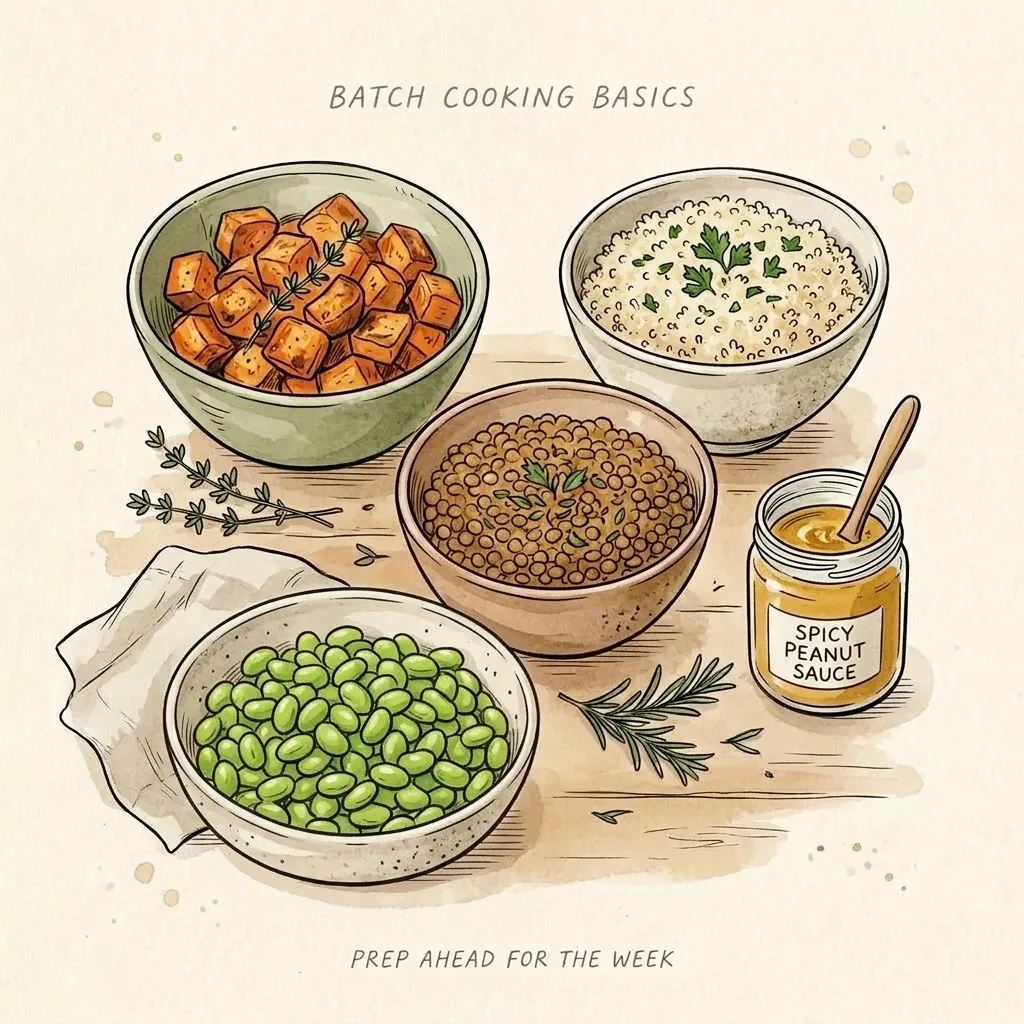
4. The Crispy Baked Tofu Secret: How to Avoid Sogginess
If you've ever had spongey, bland tofu from a meal prep container, you probably skipped the two essential prep steps:
- The Heavy Press (15 Minutes): Wrap your block of extra-firm tofu in a clean kitchen towel and place a heavy cast-iron skillet or two large cans on top. Squeezing out excess water creates space for seasonings to absorb.
- The Cornstarch Dusting: Cut the pressed tofu into 3/4-inch cubes. Toss with 1 tablespoon of olive oil, 1 tablespoon of soy sauce (or tamari), and 1 tablespoon of cornstarch. The cornstarch forms a crisp, golden crust in the oven that stays crunchy even after 4 days in the fridge.
5. My Exact 5-Day Work Lunch Menu
Using the batch ingredients prepped on Sunday, here is how I rotate lunch flavors Monday through Friday:
- Monday: Peanut Crunch Edamame Bowl: Quinoa, shelled edamame, shredded purple cabbage, cucumber slices, and a spicy peanut-lime dressing.
- Tuesday: Mediterranean Tofu Harvest: Crispy baked tofu, roasted sweet potatoes, charred broccoli, kalamata olives, and lemon-tahini dressing.
- Wednesday: Warm French Green Lentil Salad: Steamed green lentils, roasted carrots, crumbled feta (or walnuts), baby arugula, and a Dijon vinaigrette.
- Thursday: Teriyaki Tempeh & Brown Rice: Glazed tempeh triangles, steamed jasmine brown rice, roasted broccoli florets, and toasted sesame seeds.
- Friday: Kitchen Sink Protein Fiesta: Remaining edamame, black beans, sweet potatoes, avocado, and salsa over a bed of mixed greens.
6. 5-Day Refrigerator Storage and Microwave Tips
Unlike cooked chicken or fish which can develop an off-flavor ("warmed-over flavor") by Thursday, plant proteins like tofu, tempeh, and lentils maintain clean flavor through Day 5. Follow these two storage rules:
- Always pack wet dressings separately: Keep your peanut sauce or vinaigrette in small 2-oz leakproof stainless steel or silicone cups. Dress the meal right before eating.
- Enjoy cold or lukewarm: Grain bowls packed with edamame and tofu actually taste superior at room temperature. Take your lunchbox out of the office fridge 30 minutes before your break.
My 3-minute peanut dressing recipe
A good sauce saves plant-based meals. Without it, plain lentils and steamed edamame taste dry after 2 days in the fridge.
I mix this peanut sauce in a glass jar using a fork. No blender needed.
Whisk 3 tablespoons of creamy natural peanut butter with 2 tablespoons of warm water until smooth. Add 1 tablespoon of low-sodium soy sauce, 1 tablespoon of fresh lime juice, 1 teaspoon of maple syrup, and a pinch of red pepper flakes.
If it feels too thick, splash in another teaspoon of warm water. It stays fresh in the fridge for 7 days.
Kitchen tools that make plant prep easier
You do not need commercial cooking gear. Three simple kitchen tools cut my prep time in half.
First, get a dedicated spring-loaded tofu press. You can use heavy books and paper towels, but a plastic press is cleaner and extracts 40% more moisture in 15 minutes.
Second, buy 2 heavy aluminum half-sheet pans. Cheap baking sheets warp in a 400-degree oven, causing your oil to pool in the corners and burning half your tofu.
Third, switch to 30-oz rectangular glass containers with locking snap lids. Glass keeps food colder than plastic and never holds onto garlic smells.
7. Frequently Asked Questions
Do I need to combine grains and beans in the exact same meal for complete protein?
No. Nutrition science has thoroughly debunked the myth of strict meal-by-meal protein combining. As long as you eat a varied diet with grains, legumes, seeds, and vegetables throughout the day, your body maintains an amino acid pool to assemble all necessary complete proteins.
Can I freeze cooked tofu?
Yes. In fact, freezing uncooked tofu in its package before thawing and pressing alters its internal structure, making it even chewier and meat-like. Cooked crispy tofu can also be frozen, though it is crispiest when eaten fresh within 5 days from the fridge.
What is the best way to prevent gas and bloating when increasing beans and lentils?
Introduce legumes gradually (e.g. 1/3 cup per day instead of 2 cups overnight), rinse canned beans thoroughly under cold water to wash away oligosaccharides, and ensure you drink plenty of water throughout the day.