Firsthand experience note: After taking a strong course of antibiotics two years ago, my stomach felt bruised. Eating crunchy raw carrots or hard nuts felt like sandpaper inside. I spent two weeks living on pureed root vegetable soups and gentle ginger broths. They gave me energy without bloating.
Why pureed soups digest easily
Your stomach does mechanical work. It churns and grinds food into a paste before sending it to your small intestine.
When you puree cooked vegetables in an immersion blender, you do that mechanical work in the pot.
Cooking softens tough plant cellulose. Blending ruptures cell walls and releases minerals directly into the warm liquid.
Your stomach absorbs water, electrolytes, and soluble fiber without producing excess acid or painful gas cramps.
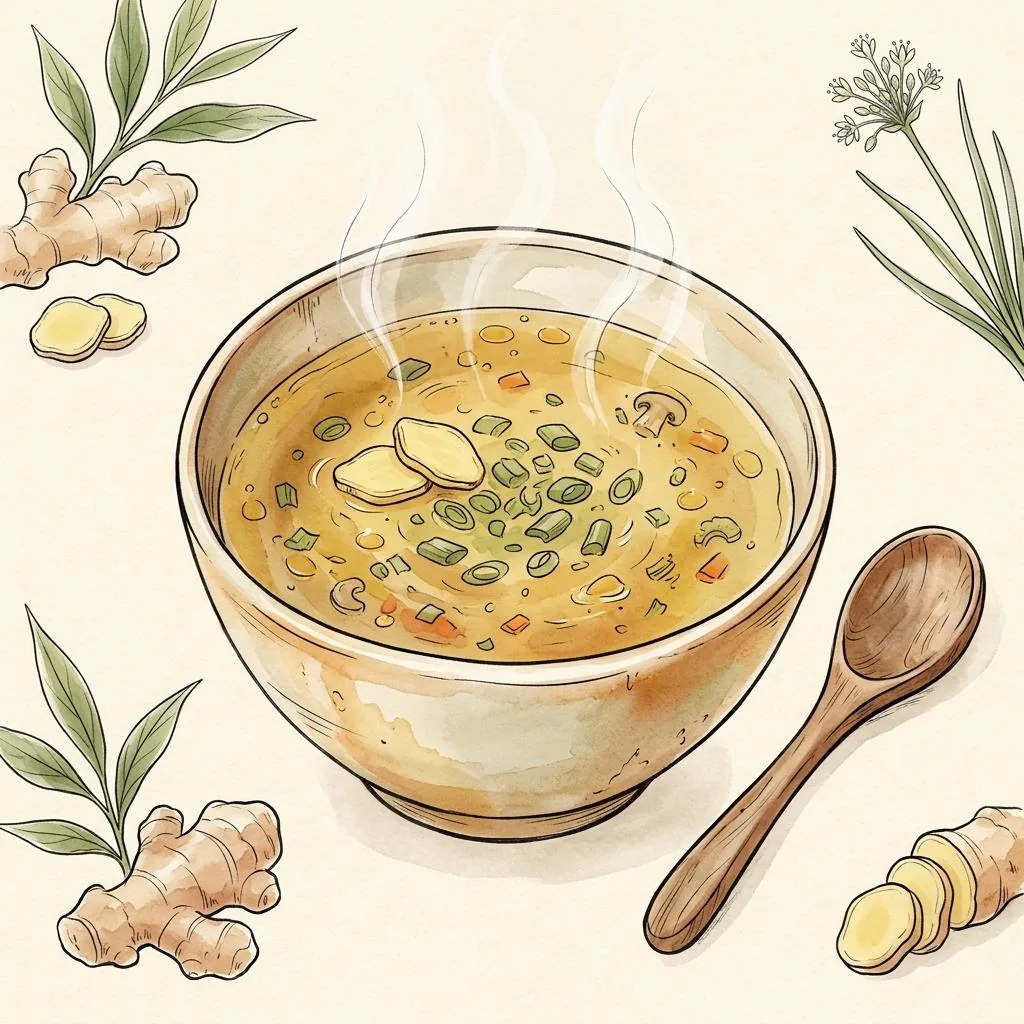
The 4-step gentle soup framework
I build all my recovery soups using this four-stage formula in a six-quart Dutch oven:
Five soothing batch soups
I rotate these five recipes depending on what ingredients are sitting in my pantry:
| Soup Name | Core Ingredients | Simmer Time | Why It Soothes |
|---|---|---|---|
| Ginger Turmeric Carrot | Carrots, fresh ginger, ground turmeric, vegetable broth, coconut milk | 25 minutes | Gingerol relaxes intestinal spasms. Pureed carrots supply pectin. |
| Golden Chicken Congee | Jasmine white rice, bone broth, shredded poached chicken, scallions | 50 minutes | Starchy broken rice grains digest instantly. Supplies amino acids. |
| Roasted Butternut Thyme | Butternut squash cubes, fresh thyme, vegetable broth, olive oil | 30 minutes | Naturally sweet and high in soluble fiber without needing cream. |
| Red Lentil Coconut Stew | Split red lentils, ground cumin, coconut milk, mild broth | 20 minutes | Split red lentils dissolve completely without skins, easing digestion. |
| Clear Miso Tofu Broth | Silken tofu, white miso paste, wakame seaweed, warm water | 8 minutes | Fermented miso delivers live enzymes. Silken tofu offers soft protein. |
My flagship ginger turmeric carrot soup
This is my go-to recipe whenever my stomach feels unsettled. You can make six large bowls in 30 minutes.
Slice two pounds of carrots into half-inch rounds. Grate two full tablespoons of fresh ginger root.
Warm one tablespoon of olive oil in your pot over medium heat. Add the ginger, one teaspoon of ground turmeric, and half a teaspoon of salt. Cook for sixty seconds until fragrant.
Dump in the carrots and add four cups of low-sodium broth. Bring to a boil, cover, and reduce heat to low for 25 minutes until carrots pierce easily with a fork.
Turn off the heat. Blend with an immersion blender until completely silky and thick. Stir in half a cup of light coconut milk for richness.
Golden chicken rice congee: the ultimate reset
Congee is traditional rice porridge simmered with abundant water until the grains break down into velvety porridge.
I put half a cup of rinsed white jasmine rice into a pot with four cups of chicken bone broth and two slices of fresh ginger.
Simmer on low heat with the lid slightly ajar for 50 minutes, stirring occasionally so the bottom does not stick.
The starch gelatinizes into a soothing cream. Stir in half a cup of shredded cooked chicken breast and a drizzle of toasted sesame oil.
Freezer puck storage system
When you feel unwell, you will not have energy to cook. I keep pre-frozen soup portions in my freezer at all times.
Pour cooled pureed soup into silicone king-sized ice cube trays or silicone freezer blocks. Each cube holds one cup of soup.
Freeze overnight. Pop the frozen soup blocks out of the mold and store them in a gallon freezer bag.
When you need dinner, drop two soup cubes into a small saucepan with two tablespoons of water over medium heat. You have hot, homemade soothing soup in five minutes.
Zero-cost scrap broth: turning vegetable trimmings into liquid gold
Store-bought carton broth costs three to four dollars per quart. You can make richer mineral broth at home for zero extra dollars.
Keep a gallon freezer ziplock bag in your freezer door. Every time you chop leek tops, carrot peels, celery leaves, or parsley stems, toss them into the bag.
Once the bag is packed tight, dump the frozen scraps into a six-quart soup pot. Cover with eight cups of cold water, two bay leaves, and ten whole black peppercorns.
Bring to a boil, then reduce heat to low and simmer uncovered for 50 minutes. Strain through a fine-mesh sieve and discard the spent pulp.
You now have golden, mineral-rich sipping broth ready for quick soups or boiling rice.
The 3-stage reintroduction ladder back to solid foods
Never rush straight from liquid soups to raw leafy salads. Your digestive tract needs gradual steps to handle rough fiber again.
Stage 1 focuses entirely on pureed liquids. Sip warm carrot ginger soup or strained chicken broth for the first 24 to 36 hours.
Stage 2 introduces soft tender starches. Enjoy warm rice congee with poached shredded chicken breast, boiled yellow potatoes, or peeled steamed zucchini slices.
Stage 3 brings back firm plant fibers. Reintroduce roasted carrots, soft stewed lentils, and peeled apples before adding raw kale or crunchy cruciferous slaws.
Frequently asked questions
Should I use bone broth or vegetable broth?
Both work well. Chicken bone broth offers gelatin and collagen that coat the stomach lining. Vegetable broth made from leeks, carrots, and celery provides clean minerals.
Can I add garlic and onions to recovery soups?
Go easy on them. Raw garlic and heavy onions contain fructans that can trigger gas in sensitive stomachs. I stick to fresh ginger root and mild scallion tops instead.
How long do blended soups last in the refrigerator?
Kept in clean glass mason jars, pureed vegetable soups stay fresh for five days in the fridge. For longer storage, use the silicone freezer block method.